How to Crack a Job Interview in 2026: Expert Tips to Get Hired
Have you ever felt nervous before a job interview? Do you worry about what the interviewer will ask or how you should answer difficult questions? You are not alone. Many freshers and experienced professionals face these challenges while searching for a good job.
The good news is that you can improve your interview performance with proper preparation and regular practice. You do not need perfect English or years of experience to make a positive impression. You need to understand the job, explain your skills clearly and show that you are ready to learn.
In this guide, you will learn how to crack a job interview in 2026 with practical tips that you can use for your next interview.
1. Research the Company and Job Role
Before attending an interview, visit the company’s official website and learn about its products, services, work culture and business goals.
Read the job description carefully. Identify the skills, qualifications and responsibilities required for the position. Then think about how your education, projects or previous experience match those requirements.
For example, if you are applying for a customer support position, prepare examples that demonstrate communication, patience and problem-solving skills.
This preparation helps you answer questions with confidence and shows that you are genuinely interested in the role.
2. Prepare Your Self-Introduction
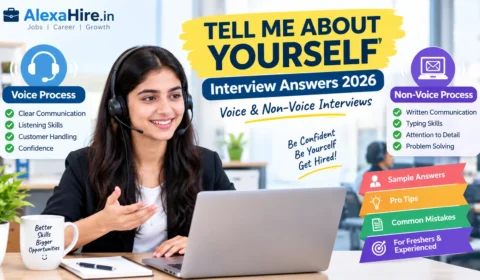
“Tell me about yourself” is one of the most common interview questions. Your answer should be short, professional and relevant to the job.
Sample answer for freshers:
“Good morning, and thank you for giving me this opportunity. I have completed my graduation and developed an interest in building my professional career. During my studies, I improved my communication, teamwork and problem-solving skills. I am eager to learn, take responsibility and contribute to your organisation. I believe this opportunity will help me grow professionally while adding value to the team.”
Change this example according to your actual education, skills and experience. Avoid memorising an answer that does not represent you.
3. Practise Common Interview Questions
Preparing answers to common questions can reduce nervousness and help you organise your thoughts.
Here are five questions worth practising:
Q1. Why should we hire you?
Sample answer: “I have the skills required for this position, a willingness to learn and a responsible attitude. I will work hard to understand the role and contribute to the team’s goals.”
Q2. What are your strengths?
Sample answer: “My strengths are adaptability, time management and a willingness to learn new things. I try to complete my work carefully and meet deadlines.”
Q3. What is your weakness?
Choose a genuine area for improvement and explain what you are doing about it. For example: “I sometimes spend too much time checking my work, so I am learning to balance accuracy with efficient time management.”
Q4. Why do you want to join our company?
Connect your answer to the company’s work, the position and your career goals. Avoid giving a generic answer that could apply to every employer.
Q5. Where do you see yourself in five years?
Explain that you want to develop relevant skills, take on more responsibility and make a meaningful contribution to the organisation.
4. Use the STAR Method for Behavioural Questions
Interviewers may ask you to describe a challenge, teamwork experience or problem you solved. The STAR method helps you answer these questions clearly.
- S – Situation: Explain the situation briefly.
- T – Task: Describe your responsibility.
- A – Action: Explain the steps you personally took.
- R – Result: Share the outcome or lesson learned.
For example, if an interviewer asks how you handled a difficult project, explain the problem, your responsibility, the actions you took and what happened afterward. Students can use examples from college projects, internships or volunteering.
5. Improve Your Body Language and Communication
Your communication includes more than the words you speak. Good posture, attentive listening and a calm speaking pace can help you appear professional.
Follow these tips:
- Greet the interviewer politely.
- Maintain natural eye contact.
- Listen to the complete question before answering.
- Speak clearly and avoid rushing.
- Keep your answers relevant.
- Ask for clarification if you do not understand a question.
- Be honest when you do not know an answer.
If English is not your strongest language, practise speaking for 10–15 minutes daily. Clear and genuine communication is more useful than using complicated words incorrectly.
6. Prepare for Technical and HR Rounds
For technical jobs, revise the fundamentals related to the position. Software candidates may need to practise programming, databases, projects and problem-solving. Customer service applicants should prepare for questions about handling complaints and communicating with customers.
For HR interviews, practise discussing your background, strengths, career goals, availability and salary expectations.
Make sure you understand every project or skill mentioned on your resume. Interviewers may ask follow-up questions about your own work.
7. Dress Professionally and Carry the Required Documents
Choose clean, appropriate clothing based on the company and interview format. For an in-person interview, plan your route and aim to arrive around 10–15 minutes early.
Keep these items ready if requested:
- Updated resume copies
- Educational certificates or marksheets
- Government-issued identification
- Portfolio or project details
- Notebook and pen
- Any documents specifically mentioned in the interview invitation
Never share sensitive documents with unverified recruiters.
8. How to Crack an Online Interview
Many companies conduct interviews through video calls. Prepare your device, internet connection, camera and microphone before the scheduled time.
Choose a quiet place with good lighting and a clean background. Keep your resume and job description nearby, silence notifications and join the meeting a few minutes early.
Look towards the camera when speaking, listen carefully and avoid reading every answer from a script. If the connection fails, follow the recruiter’s instructions to reconnect.
9. Ask Questions and Follow Up
At the end of the interview, you may be asked whether you have any questions. Use this opportunity to understand the role better.
You could ask:
- What would my main responsibilities be during the first three months?
- How is performance measured in this role?
- What learning and development opportunities are available?
After the interview, send a short thank-you email within 24 hours. Thank the interviewer for their time and briefly confirm your interest in the position. A follow-up is professional, but it does not guarantee selection.
Final Checklist Before Your Interview
- Research the company and job description.
- Practise your introduction and common questions.
- Review your resume and relevant skills.
- Prepare real examples of your achievements.
- Check your clothing, documents and travel plans.
- Test your equipment for online interviews.
- Prepare two or three thoughtful questions.
Frequently Asked Questions
1. How can freshers crack a job interview?
Freshers should prepare a clear introduction, understand their academic projects, practise common questions and demonstrate a willingness to learn. Examples from college activities and internships can also show relevant skills.
2. How can I answer interview questions confidently?
Practise answers aloud, organise your thoughts and use real examples. Pause briefly before answering if you need time to think.
3. What should I avoid during an interview?
Avoid arriving late, exaggerating your skills, criticising former employers, interrupting the interviewer or giving unrelated answers.
4. How long should an interview answer be?
Keep simple answers concise, usually around 30–90 seconds. Use longer answers when the interviewer asks for a detailed example or explanation.
5. Can I crack an interview with average English?
Yes. Focus on clear communication, understanding the questions and giving honest, relevant answers. Practise regularly to improve your fluency and confidence.
Conclusion
Learning how to crack a job interview takes preparation, practice and patience. Research the company, understand the role, practise common questions and support your answers with real examples. Whether you are a fresher attending your first interview or an experienced professional looking for a better opportunity, these steps can help you present yourself more effectively.
Visit AlexaHire.in for more career advice, resume tips, interview preparation guides and job opportunities. Prepare consistently, learn from every interview and keep moving towards your career goals.
Disclaimer: Interview formats and hiring criteria vary by company and position. Always follow the instructions provided by the employer.