Top High-Income Skills to Learn in 2026 for a High-Paying Career
Choosing the right skills can make a big difference in your career. In 2026, companies are looking for people who can solve problems, work with modern technology, analyse information and help businesses grow. A college degree is valuable, but practical skills and real project experience can also improve your job opportunities.
Whether you are a student, fresher, working professional or someone planning a career change, learning a high-income skill can help you prepare for better career opportunities.
In this guide, we will explore the top high-income skills to learn in 2026, the career options they offer and how you can start learning them.
Why Should You Learn High-Income Skills in 2026?
Technology and business requirements continue to change. Companies are adopting artificial intelligence, cloud platforms, automation, and data-driven decision-making to improve productivity.
According to the NIIT India Skills Gap Report 2026, AI, cybersecurity, digital, and data skills are important areas for future employability in India.
Learning relevant skills can help you:
- Apply for more suitable job opportunities.
- Improve your chances of career growth.
- Build practical experience through projects.
- Explore freelance and remote work opportunities.
- Prepare for changing industry requirements.
However, no skill guarantees a high salary. Your income will depend on your experience, location, employer, portfolio, and ability to apply what you learn.
1. Artificial Intelligence and Generative AI
Artificial Intelligence (AI) is one of the most important technology areas to explore in 2026. Businesses use AI tools for research, customer support, content creation, data analysis, and software development.
Skills to learn:
- AI fundamentals and responsible AI use
- Generative AI tools and prompt writing
- Python programming
- Large language models (LLMs) and APIs
- AI workflow automation
Career options: AI Engineer, Generative AI Developer, AI Automation Specialist, and AI Consultant.
How to start: Learn the basics of AI, practise using AI tools, and create small projects. If you want a technical role, continue with Python, APIs, and machine learning fundamentals.
2. Data Analytics and Business Intelligence
Data analytics helps businesses understand information and make better decisions. Companies use data to track sales, customer behaviour, expenses, and business performance.
Skills to learn:
- Microsoft Excel
- SQL
- Power BI or Tableau
- Basic statistics
- Python for data analysis
Career options: Data Analyst, Business Analyst, Reporting Analyst, and Business Intelligence Analyst.
How to start: Learn Excel and SQL first. Then practise building dashboards using a sample sales or customer dataset. Add two or three projects to your portfolio to demonstrate your abilities.
This field can be suitable for commerce graduates, management students and professionals who enjoy working with numbers and business information.
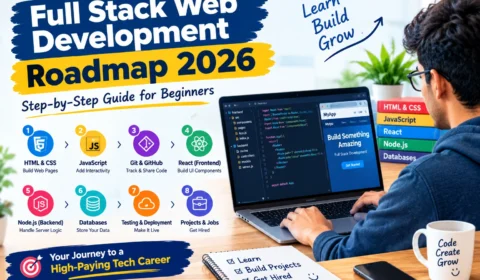
3. Software Development and Full-Stack Development
Software developers build websites, applications, and digital products. Organisations need developers to create new systems, maintain existing applications and improve user experiences.
Skills to learn:
- HTML and CSS
- JavaScript and TypeScript
- React or another modern frontend framework
- Node.js or a backend technology
- Databases, Git, and testing
Career options: Frontend Developer, Backend Developer, Full-Stack Developer, and Software Engineer.
How to start: Learn programming fundamentals and build practical projects, such as a portfolio website, task manager, or job listing website. Understanding debugging and version control is also important.
4. Cloud Computing and DevOps
Cloud computing allows companies to run applications and store information using online infrastructure. DevOps practices help development and operations teams release software more reliably.
Skills to learn:
- AWS, Microsoft Azure or Google Cloud
- Linux fundamentals
- Networking basics
- Docker and containerisation
- CI/CD and infrastructure automation
Career options: Cloud Engineer, DevOps Engineer, Cloud Administrator and Site Reliability Engineer.
How to start: Learn networking and Linux basics before choosing a cloud platform. Practise deploying a simple application and explore entry-level certifications where they match your career goals.
5. Cybersecurity
Cybersecurity focuses on protecting computer systems, networks and information from digital threats. Businesses need professionals who can identify risks, secure systems and respond to security incidents.
Skills to learn:
- Networking and operating system fundamentals
- Security principles
- Identity and access management
- Security monitoring
- Incident response and risk management
Career options: Security Analyst, SOC Analyst, Information Security Analyst and Security Engineer.
How to start: Build a strong foundation in networking and operating systems. Practise in authorised training labs and study recognised security certifications. Never test systems without permission.
6. Digital Marketing and SEO
Digital marketing helps businesses reach customers through search engines, websites, social media, email and online advertising. It can be a useful career path for people who enjoy communication, creativity and business growth.
Skills to learn:
- Search engine optimisation (SEO)
- Content marketing
- Social media marketing
- Google Analytics and campaign reporting
- Paid advertising and conversion optimisation
Career options: SEO Executive, Digital Marketing Specialist, Content Strategist and Performance Marketing Executive.
How to start: Create a small website or practise with a sample campaign. Learn keyword research, content optimisation and analytics. Build a portfolio that shows what you did and what you learned.
7. UI/UX Design
UI/UX designers help make websites and applications easier to use. UI focuses on the visual interface, while UX focuses on the overall user experience.
Skills to learn:
- Figma or similar design tools
- Wireframing and prototyping
- User research
- Design systems
- Usability testing
Career options: UI Designer, UX Designer, Product Designer, and Interaction Designer.
How to start: Redesign a simple app screen, create a website prototype, and explain the problems your design solves. A strong portfolio is especially useful in this field.
8. Sales, Communication and Business Skills
Technical knowledge is not the only way to improve your earning potential. Sales, negotiation, communication, and project management skills are valuable across many industries.
Skills to learn:
- Business communication
- Customer relationship management (CRM)
- Negotiation and presentation
- Problem-solving
- Project planning and stakeholder management
Career options: Business Development Executive, Account Manager, Project Coordinator, and Sales Specialist.
How to start: Practise professional English, learn how to present ideas clearly, and gain experience through internships, projects or entry-level roles. Combine these skills with knowledge of a specific industry.
Which High-Income Skill Should You Choose?
| Your interest or background | Skills to consider |
|---|---|
| Commerce or business | Data analytics, Excel, SQL, digital marketing |
| Coding and technology | Software development, AI, cloud computing |
| Security and systems | Cybersecurity, networking, cloud |
| Creativity and design | UI/UX design, digital marketing |
| Communication and business | Sales, CRM, project management |
| Beginner with no technical background | Excel, AI fundamentals, communication, SEO |
Choose a skill based on your interests, existing knowledge, and the jobs you want to apply for. You do not need to learn every skill on this list.
How to Learn High-Income Skills for Free
You can begin learning without spending a large amount of money. Follow these steps:
- Choose one skill: Select a field that matches your career goal.
- Learn the fundamentals: Use free tutorials, documentation and beginner courses.
- Practise regularly: Set aside 30–60 minutes a day if your schedule allows.
- Build real projects: Apply what you learn to practical problems.
- Create a portfolio: Collect your projects, reports, designs or code in one place.
- Prepare your resume: Highlight relevant skills and project results honestly.
- Apply for opportunities: Explore internships, fresher jobs, and entry-level roles related to your skills.
For structured learning, explore Coursera’s 2026 Job Skills Report and the learning resources offered by technology providers.
Common Mistakes to Avoid
- Learning several unrelated skills at the same time.
- Collecting certificates without practical experience.
- Expecting a high salary immediately after completing a course.
- Copying projects without understanding how they work.
- Ignoring communication and interview preparation.
- Trusting courses that promise guaranteed jobs or unrealistic salaries.
Focus on developing skills that you can demonstrate during an interview.
Conclusion
The top high-income skills to learn in 2026 include artificial intelligence, data analytics, software development, cloud computing, cybersecurity, digital marketing, UI/UX design and business communication.
The best choice is not necessarily the trendiest skill. It is the one that matches your interests, career goals and the opportunities available to you.
Start with one skill, practise consistently and build projects that demonstrate your abilities. With time, practical experience and continuous learning, you can improve your chances of finding better career opportunities.
For more job updates, career advice and skill-building guides, visit AlexaHire.in.
Frequently Asked Questions (FAQs)
1. Which skill is best to learn in 2026?
AI, data analytics, software development, cloud computing and cybersecurity are worth exploring. The best option depends on your interests and career goals.
2. Which high-income skill can a beginner learn?
Beginners can start with Excel, data analytics fundamentals, digital marketing, AI literacy or web development. Choose one and practise with small projects.
3. Can I learn high-income skills for free?
Yes. Many platforms provide free tutorials, documentation and introductory courses. You may need to pay for some advanced courses or certifications, but you can begin practising for free.
4. Can commerce students learn high-income skills?
Yes. Commerce students can explore data analytics, Excel, SQL, digital marketing, business analysis and CRM tools. Technical roles may require additional programming or mathematics knowledge.
5. How long does it take to learn a high-income skill?
Basic knowledge may take a few weeks or months, while job-ready proficiency often requires longer and depends on the skill, your starting point and practice time. Building projects and gaining experience are essential.
6. Do high-income skills guarantee a high salary?
No. Salary depends on many factors, including experience, job responsibilities, employer, location and demonstrated ability. Learning a valuable skill can improve your opportunities, but it cannot guarantee a particular income.