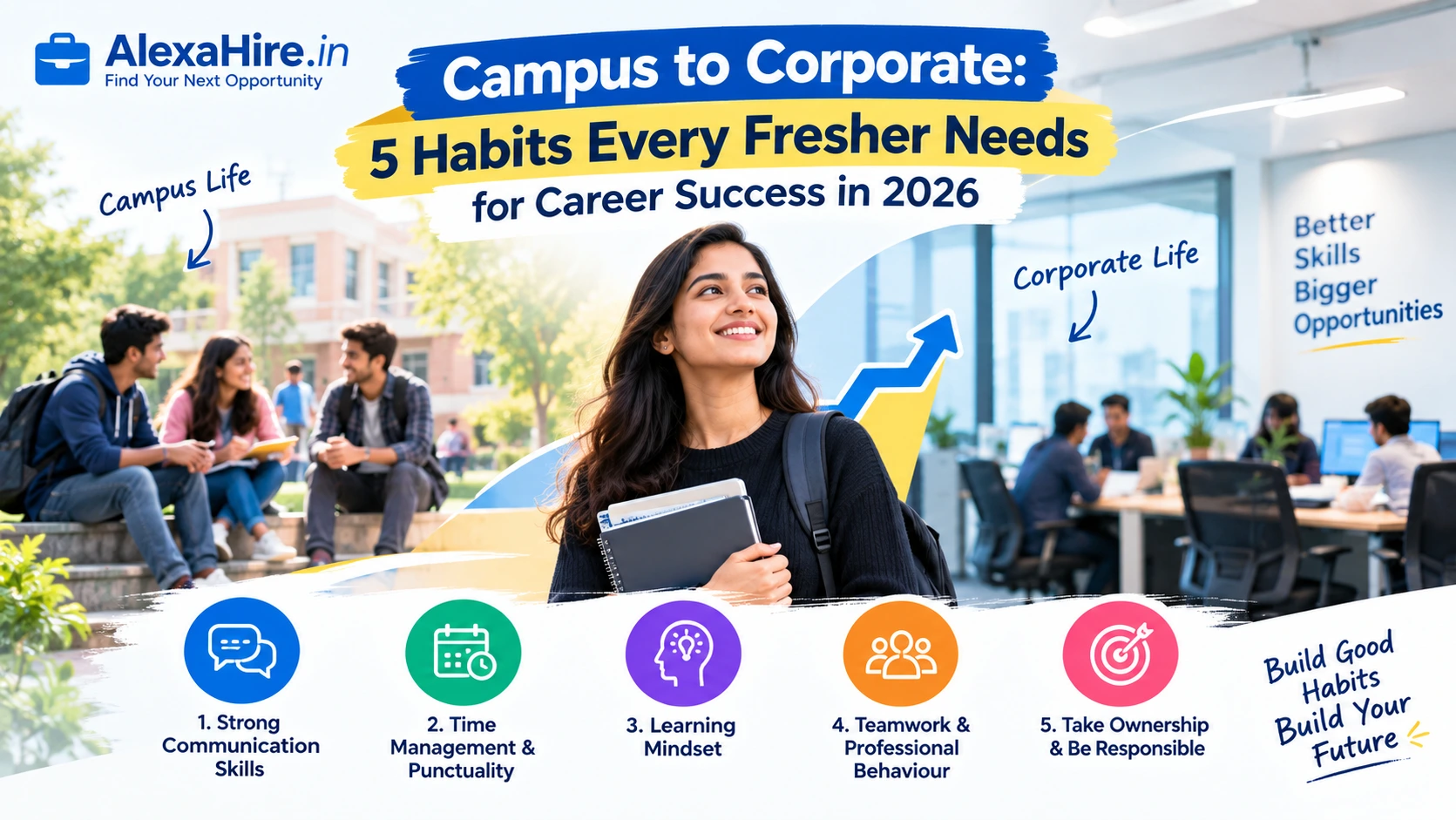
Campus to Corporate: 5 Habits Every Fresher Needs for Career Success in 2026
Campus to Corporate Habits for Fresher, Starting your first job after college is an exciting milestone. However, moving from campus life to corporate life can feel challenging. In college, students mainly focus on classes, exams, assignments, and projects. In a company, employees must also manage deadlines, communicate with colleagues, solve problems, and take responsibility for their work.
The good news is that you do not need years of experience to become a good professional. By developing a few simple habits, you can improve your confidence, perform better at work, and build a strong foundation for your career.
In this blog, we will discuss five important habits every fresher should develop before entering the corporate world.
What Does Campus to Corporate Mean?
Campus to corporate means transitioning from student life to professional life. It involves learning how to work in a team, follow company processes, communicate professionally, and deliver work within deadlines.
Your degree provides subject knowledge, but workplace habits help you apply that knowledge in real situations. Companies may provide training for technical skills, but freshers also need to show responsibility, adaptability, and a willingness to learn.
1. Develop Strong Communication Skills
Communication is one of the most important habits for freshers. You may have excellent technical knowledge, but you also need to explain your ideas clearly to managers, colleagues, and clients.
Professional communication includes speaking politely, listening carefully, writing clear emails, and asking questions when something is unclear.
For example, if you cannot complete a task on time, inform your manager early instead of waiting until the deadline. Explain the problem and share what you are doing to resolve it.
How to develop this habit:
- Practise speaking English for 10–15 minutes every day.
- Learn how to write professional emails.
- Listen carefully during meetings and training sessions.
- Ask questions whenever you do not understand a task.
- Give clear and honest updates about your work.
Remember, good communication does not mean speaking perfect English. It means sharing information clearly, respectfully, and confidently.
2. Learn Time Management and Punctuality
In college, students may sometimes delay assignments or study just before examinations. In corporate life, missing deadlines can affect the work of an entire team.
Freshers should learn to manage their daily schedules, prioritise important tasks, and complete assignments on time. Punctuality also shows that you respect other people’s time.
Start your day by reviewing your tasks. Identify which work is urgent and which can be completed later. If a task requires more time than expected, inform the concerned person as early as possible.
How to develop this habit:
- Prepare a daily to-do list.
- Break large tasks into smaller steps.
- Set reminders for meetings and deadlines.
- Avoid unnecessary distractions during working hours.
- Review your progress before finishing the day.
Good time management can reduce stress, improve productivity, and help you become a dependable team member.
3. Build a Learning Mindset
Your first job is not the end of your learning journey. In fact, corporate life introduces new tools, technologies, processes, and responsibilities.
Freshers are not expected to know everything from the first day. However, employers appreciate people who are willing to learn, accept feedback, and improve their performance.
If your manager points out a mistake, do not take it personally. Understand what went wrong, correct it, and avoid repeating the same mistake.
You can also improve your career prospects by learning skills related to your job role. For example, a software developer can practise programming, while a finance fresher can improve Excel and data analysis skills.
How to develop this habit:
- Spend time learning a job-related skill every week.
- Take notes during training sessions.
- Ask experienced colleagues for guidance.
- Accept constructive feedback positively.
- Practise new skills through projects and assignments.
A learning mindset helps you adapt to change and become more confident in your work.
4. Develop Teamwork and Professional Behaviour
Corporate work is rarely completed by one person alone. Employees often work with colleagues from different departments, backgrounds, and experience levels.
Being a good team member means respecting others, sharing information, helping when appropriate, and completing your responsibilities. You should also learn to disagree politely and discuss problems without blaming others.
Professional behaviour includes being punctual, following workplace rules, respecting confidentiality, and treating everyone fairly.
How to develop this habit:
- Respect your colleagues and their opinions.
- Listen without interrupting others.
- Complete your assigned responsibilities.
- Give credit to teammates when they contribute.
- Stay calm when disagreements occur.
- Follow company policies and professional boundaries.
Technical knowledge can help you complete tasks, but teamwork helps you contribute to larger projects and build positive workplace relationships.
5. Take Ownership and Be Responsible
Taking ownership means accepting responsibility for your tasks and making a genuine effort to complete them correctly.
Managers value employees who keep track of their work, communicate problems early, and look for practical solutions. If you make a mistake, acknowledge it and focus on fixing it instead of hiding it or blaming someone else.
For example, if you discover an error in a report, inform the relevant person, correct the information, and check how you can prevent similar errors in the future.
How to develop this habit:
- Understand the expected result before starting a task.
- Ask for clarification when requirements are unclear.
- Track your progress and deadlines.
- Report blockers early.
- Check your work before submitting it.
- Learn from mistakes and follow through on commitments.
Taking ownership does not mean doing everything alone. It means being accountable while asking for help when necessary.
Campus Life vs Corporate Life
| Campus Life | Corporate Life |
|---|---|
| Focus on classes and examinations | Focus on responsibilities and results |
| Assignments may have flexible schedules | Work often follows agreed deadlines |
| Mostly student-focused activities | Teamwork with colleagues and managers |
| Feedback through marks and grades | Feedback through performance and work quality |
| Learning mainly through courses | Continuous learning through work and training |
Understanding these differences can help freshers prepare mentally for their first job.
How Freshers Can Prepare Before Their First Job
You can start developing these habits even before receiving a job offer. Practise professional communication, complete college projects on time, learn useful digital tools, and participate in group activities.
You can also prepare for interviews by explaining your projects, describing problems you solved, and sharing examples of teamwork. Internships, volunteering, and personal projects can help you practise responsibility in real situations.
Most importantly, do not compare your beginning with someone else’s career progress. Focus on improving a little every day.
Frequently Asked Questions (FAQs)
1. What are the most important habits for freshers?
Communication, time management, continuous learning, teamwork, and taking ownership are five useful habits for starting a professional career.
2. How can freshers adjust to corporate life?
Freshers can adjust by learning company processes, asking questions, respecting deadlines, accepting feedback, and communicating regularly with their teams.
3. Is English fluency necessary for a corporate job?
Requirements depend on the role. Clear communication is important, but perfect English is not always necessary. Practise expressing your ideas clearly and professionally.
4. How can freshers improve workplace communication?
Practise speaking, write clear emails, listen carefully, ask relevant questions, and provide timely updates about your work.
5. Can freshers succeed without prior work experience?
Yes. Many entry-level jobs are designed for beginners. Relevant skills, practical projects, a willingness to learn, and professional behaviour can help freshers get started.
Final Words
Moving from campus to corporate life is a major step, but you do not need to become a perfect professional overnight. Start with five habits: communicate clearly, manage your time, keep learning, work well with others, and take ownership of your responsibilities.
Practise these habits consistently, and you can make your first job experience smoother while building a strong foundation for long-term career growth.
For more career advice, fresher opportunities, and job updates, visit AlexaHire.in.
