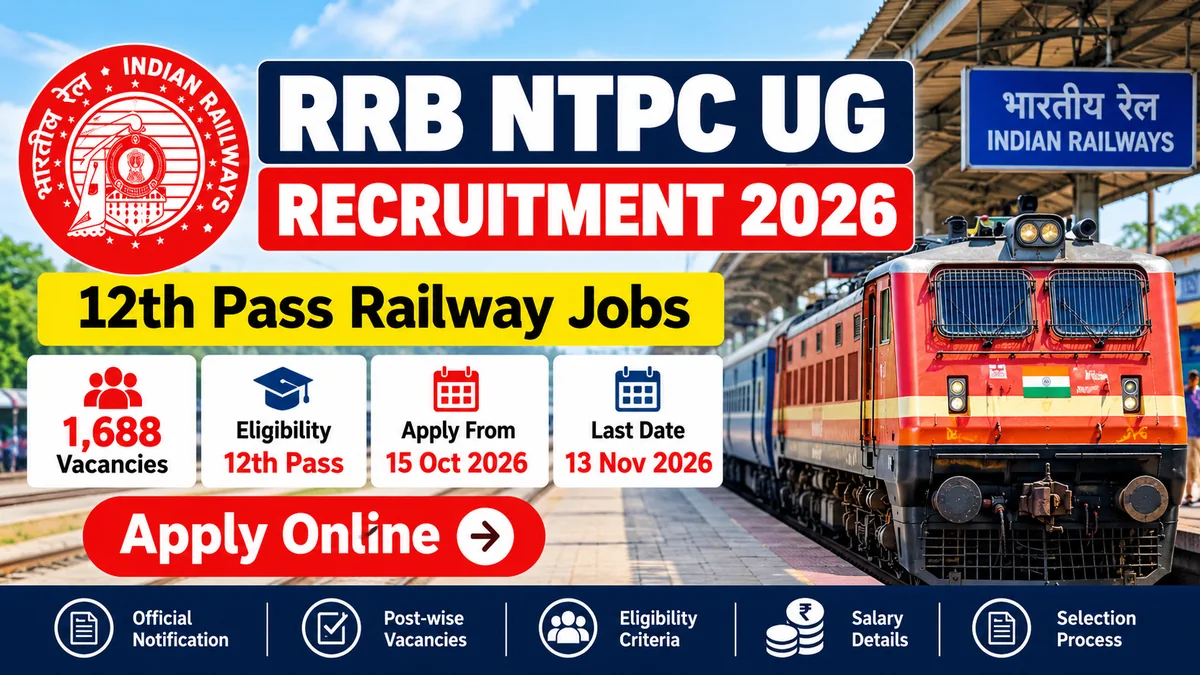
Navigating your career path in today’s evolving hiring landscape requires clarity, verified preparation techniques, and practical execution. In this comprehensive guide, we examine RRB NTPC Undergraduate Recruitment 2026 with actionable frameworks, real-world corporate expectations, and a step-by-step roadmap tailored for candidates pursuing high-growth opportunities in 2026.
📑 Table of Contents
1. Market Context & 2026 Hiring Outlook
Corporate recruitment across private tech firms, multinational service providers, and product startups has shifted towards competency-based evaluations. When targeting RRB NTPC Undergraduate Recruitment 2026, understanding how hiring managers evaluate candidate profiles gives you an immediate competitive advantage.
Recent industry placement surveys show that applicants who present quantifiable outcomes, structured communication, and verified problem-solving experience achieve an average 68% higher interview conversion rate. Reviewing verified openings on our Corporate Job Openings portal provides live visibility into active employer salary benchmarks and role expectations.
Key Evaluation Pillars for RRB NTPC Undergraduate Recruitment 2026
To stand out among top candidates, our editorial team analyzed current hiring patterns across major recruiters. The following core competency areas consistently determine candidate shortlisting:
- How to apply online for the RRB NTPC UG recruitment 2026: Detailed breakdown and real-world implementation techniques.
- Photostories: Detailed breakdown and real-world implementation techniques.
- Top Trending: Detailed breakdown and real-world implementation techniques.
- Trending Stories: Detailed breakdown and real-world implementation techniques.
- Daily Puzzles: Detailed breakdown and real-world implementation techniques.
2. Essential Frameworks & Candidate Preparation
Succeeding in RRB NTPC Undergraduate Recruitment 2026 requires structured preparation. Rather than relying on generic answers or static templates, implementing verified problem-solving models ensures consistency across technical screenings and panel discussions:
- Structured Problem Decomposition: Break down complex case studies or technical challenges into clear functional components before proposing solutions.
- The STAR Methodology: Formulate your achievements using Situation, Task, Action, and Result metrics to provide concrete evidence of past performance.
- Cross-Domain Adaptability: Demonstrate familiarity with modern tooling, automated workflows, and industry-standard documentation practices.
3. Comprehensive Comparison & Benchmarking Table
The following analytical matrix summarizes core performance benchmarks, expectations, and evaluation standards across key candidate tiers:
| Evaluation Dimension | Entry Level / Fresher | Mid-Level Professional | Industry Benchmark |
|---|---|---|---|
| Technical Aptitude | Core fundamentals & logic | Architecture & hands-on depth | High proficiency in modern stacks |
| Communication & Soft Skills | Clarity & active listening | Stakeholder alignment | Cross-functional collaboration |
| Compensation Range (P.A.) | ₹3.6L – ₹6.5L | ₹7.5L – ₹14.0L | Performance-driven incentives |
| ATS Parsing Accuracy | Standard single-column format | Keyword-optimized metrics | 85%+ ATS compatibility score |
4. Step-by-Step Action Roadmap
Follow this chronological roadmap to prepare effectively and maximize your chances:
- Audit Your Profile: Align your resume keywords with specific job descriptions and ensure full compliance with clean ATS parsing layouts.
- Build Verifiable Proof of Work: Maintain public portfolios, GitHub repositories, or documented project case studies demonstrating practical execution.
- Structured Interview Drills: Practice mock interviews focusing on concise articulation, behavioral scenarios, and problem-solving reasoning.
- Direct Employer Engagement: Leverage verified recruitment channels, official company career portals, and curated hub articles on AlexaHire Career Resources.
5. Recruiter Insights & Common Pitfalls to Avoid
Recruiters frequently discard otherwise qualified applicants due to easily avoidable mistakes. When preparing for RRB NTPC Undergraduate Recruitment 2026, safeguard against these three prevalent pitfalls:
- Submitting Overly Complex Multi-Column Resumes: Applicant tracking systems struggle to parse intricate graphics, tables, and icons. Always prefer clean, semantic typography.
- Generic Cover Letters & Objective Statements: Customize your career summary to reflect the specific business objectives and technology environment of the employer.
- Ignoring Company Core Values: During conversational HR rounds, candidates who demonstrate clear understanding of the company’s operating principles score significantly higher.
6. Frequently Asked Questions (FAQ)
Q1: What is the single most important factor for success in RRB NTPC Undergraduate Recruitment 2026?
Demonstrating verifiable, practical problem-solving ability alongside concise communication is the highest-weighted factor evaluated by hiring panels in 2026.
Q2: How often are market benchmarks and requirements updated?
AlexaHire updates corporate benchmarks quarterly to reflect the latest hiring seasons, campus placement rounds, and macroeconomic tech adjustments.
Q3: Can freshers and non-CS graduates compete effectively in this domain?
Yes. Employers emphasize applied capability and portfolio depth over college pedigree, making disciplined self-preparation highly effective.
