Top High-Income Skills to Learn 2026 for a High-Paying Career
Are you looking to increase your income, get a better job, or start earning through freelancing in 2026? Learning the right high-income skills can help you explore better career opportunities without necessarily changing your degree or spending years in additional education.
The job market is evolving as businesses adopt artificial intelligence, automation, cloud technology, and digital marketing. Employers increasingly need people who can solve problems, analyse information, build digital products, and help businesses grow.
Whether you are a student, fresher, working professional, or career changer, choosing a valuable skill can be an important step towards professional growth. In this guide, AlexaHire explores the top high-income skills to learn in 2026, the jobs associated with them, and how beginners can get started.
1. Artificial Intelligence and Generative AI
Artificial intelligence (AI) is becoming useful across industries, including technology, finance, healthcare, education, and marketing. Learning AI tools and understanding how to apply them to real business problems can help professionals improve productivity and explore specialised roles.
Skills to learn:
- Generative AI tools and prompt design
- Python programming and AI fundamentals
- Large language models and AI automation
- AI application development
Career opportunities: AI Engineer, Machine Learning Engineer, AI Automation Specialist, and AI Solutions Developer.
Beginners can start by learning how AI works and building a simple AI-powered application or workflow. Advanced engineering positions usually require deeper programming, mathematics, and technical knowledge.
2. Data Analytics and Business Intelligence
Data analytics is a useful skill for people who enjoy numbers, reports, and business problem-solving. Companies use data to understand customers, track performance, and make informed decisions.
Skills to learn: Microsoft Excel, SQL, Power BI, Tableau, and basic statistics.
Career opportunities: Data Analyst, Business Intelligence Analyst, Reporting Analyst, and Operations Analyst.
You can begin with Excel and SQL before moving to dashboards and Python. Build a sample sales dashboard or analyse a business dataset to demonstrate your practical skills.
This field can be particularly interesting for commerce, finance, economics, and management graduates.
3. Digital Marketing and SEO
Digital marketing helps businesses attract customers through search engines, social media, email, and online advertising. It can offer opportunities in full-time employment, freelance work, consulting, and agency services.
Skills to learn:
- Search engine optimisation (SEO)
- Google Ads and social media advertising
- Content strategy and keyword research
- Website analytics and conversion optimisation
- Email marketing and campaign reporting
Career opportunities: SEO Executive, Digital Marketing Specialist, Performance Marketing Executive, and Content Strategist.
Beginners can practise by building a small website, improving its content, tracking traffic, and creating a sample advertising campaign. Performance marketing and analytics skills can be valuable additions to basic digital marketing knowledge.
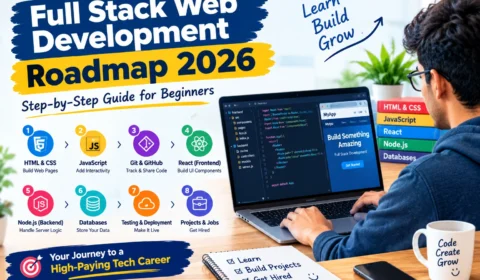
4. Software Development and Web Development
Software development remains an important career path for people who want to create applications, websites, and digital tools. Strong programming skills and practical projects can help candidates demonstrate their abilities.
Skills to learn: HTML, CSS, JavaScript, Python, Java, Git, and relevant development frameworks.
Career opportunities: Software Developer, Front-End Developer, Back-End Developer, and Full-Stack Developer.
Start with one programming language and understand its fundamentals before learning multiple frameworks. Create projects such as a personal portfolio, task manager, or simple business website.
A strong portfolio and interview preparation can help you compete for suitable entry-level roles.
5. Cloud Computing and DevOps
Cloud computing allows organisations to run applications, store information, and manage infrastructure using online platforms. DevOps focuses on improving software delivery, deployment, and operational reliability.
Skills to learn: AWS, Microsoft Azure, Google Cloud, Linux, Docker, CI/CD, and infrastructure fundamentals.
Career opportunities: Cloud Engineer, DevOps Engineer, Cloud Support Associate, and Site Reliability Engineer.
Beginners should first understand networking, operating systems, and basic cloud concepts. Practical labs and small deployment projects can help develop useful experience.
6. Cybersecurity
Cybersecurity professionals help protect organisations against unauthorised access, data theft, and digital attacks. As businesses depend more heavily on digital systems, security knowledge is important across many industries.
Skills to learn: Networking, Linux, security fundamentals, identity management, log analysis, and security monitoring tools.
Career opportunities: SOC Analyst, Cybersecurity Analyst, Information Security Specialist, and Security Engineer.
New learners can start with networking fundamentals and defensive security labs. Some advanced security positions require industry experience and specialised certifications, so choose a learning path that matches your current level.
7. UI/UX Design
UI/UX design focuses on making websites and applications attractive, accessible, and easy to use. It may suit people who enjoy visual design, research, creativity, and understanding user behaviour.
Skills to learn: Figma, wireframing, prototyping, user research, and usability testing.
Career opportunities: UI Designer, UX Designer, Product Designer, and UX Research Assistant.
Build a portfolio with two or three case studies that explain the problem, your design decisions, and how the proposed solution improves the user experience.
8. Sales, Communication, and Business Development
Technical skills are not the only way to increase earning potential. Businesses also value professionals who can communicate effectively, understand customer needs, negotiate, and generate revenue.
Skills to learn: Business communication, negotiation, CRM tools, lead generation, presentation, and customer relationship management.
Career opportunities: Business Development Executive, Sales Development Representative, Account Manager, and Customer Success Specialist.
These skills can complement an existing qualification and may be particularly useful for graduates from commerce, management, and other non-technical backgrounds.
How to Choose the Right High-Income Skill
Do not choose a skill only because someone promises a high salary. Consider your interests, existing strengths, available learning time, and the types of jobs advertised by employers.
Follow these steps:
- Choose one skill that matches your interests and background.
- Review real job descriptions to identify the most common requirements.
- Learn the fundamentals using reliable resources and structured practice.
- Complete two or three practical projects that demonstrate your abilities.
- Update your resume and portfolio with measurable examples of your work.
- Apply for suitable jobs, internships, freelance projects, or trainee positions.
Can Beginners Earn Money After Learning These Skills?
Yes, beginners may earn money through employment, freelancing, or small client projects once they can deliver useful work. However, completing a course does not guarantee immediate income.
Your earnings depend on your skill level, location, experience, portfolio, communication, and market demand. Focus on becoming good at solving a specific problem rather than trying to learn every popular tool at once.
Final Thoughts
The top high-income skills to learn in 2026 include AI, data analytics, digital marketing, software development, cloud computing, cybersecurity, UI/UX design, and business development.
The best skill for you is the one that matches your strengths and has relevant opportunities in your target job market. Start small, practise consistently, build real projects, and continue improving as technology and employer requirements change.
Visit AlexaHire.in for more career advice, job updates, remote work opportunities, and practical guides to help you take the next step in your professional journey.
Frequently Asked Questions
1. Which high-income skill is best to learn in 2026?
AI, data analytics, cloud computing, cybersecurity, software development, and specialised digital marketing are options worth exploring. The best choice depends on your background and career goals.
2. Which skill can I learn without a technical degree?
Digital marketing, SEO, data analytics, UI/UX design, and business development can be accessible starting points, depending on the role and your willingness to learn.
3. Can I learn high-income skills for free?
Yes. Free tutorials, documentation, practice platforms, and project-based learning resources can help you build a foundation before investing in paid training.
4. How long does it take to learn a high-income skill?
Basic knowledge may take weeks or months to develop, while job-ready proficiency can take longer. The timeline depends on the skill, your starting point, and how regularly you practise.
5. Do high-income skills guarantee a high salary?
No. Income depends on experience, skill depth, employer requirements, location, and market conditions. Practical ability and consistent improvement are important for long-term growth.