Top 10 Resume Mistakes to Avoid (And How to Fix Them)
Have you applied for a job but received no interview call? Before applying again, check your resume. Sometimes, small mistakes can make it difficult for a recruiter to understand your skills and education.
A resume is a short document that tells a company who you are, what you have studied, what skills you have and why you may be suitable for a job.
You do not need expensive software or years of work experience to create a good resume. Even if you have passed Class 10 or Class 12, you can make your resume better by following a few simple steps.
In this guide, you will learn the top 10 resume mistakes to avoid, why resumes may be rejected and how to fix common problems with easy examples.
Table of Contents
-
Using the Same Resume for Every Job
-
Spelling and Grammar Mistakes
-
Making Your Resume Difficult to Read
-
Adding Unnecessary Information
-
Writing a Weak Career Objective
-
Listing Duties Instead of Skills
-
Missing Skills and Projects
-
Adding False Information
-
Incorrect Contact Details
-
Choosing the Wrong Length or Format
-
Bad Resume vs Good Resume Example
-
Resume Checklist and FAQs
Top 10 Resume Mistakes to Avoid
1. Using the Same Resume for Every Job
Different jobs require different skills. A computer operator may need basic computer knowledge, while a customer support executive needs good communication skills.
Wrong example: “I want any job in a good company.”
Better example: “I have basic computer knowledge and can use MS Word and Excel for office tasks.”
How to fix it: Read the job description and highlight your relevant skills. You can learn more from these resume tips for freshers and job seekers.
2. Spelling and Grammar Mistakes
Spelling mistakes can make your resume look careless. They may also make important information difficult to understand.
Wrong: “I have good comunication skill.”
Better: “I have good communication skills.”
How to fix it: Read your resume before sending it. Check spelling, grammar, names, dates and education details.
3. Making Your Resume Difficult to Read
Too many colours, unusual fonts and long paragraphs can make your resume confusing.
Wrong: A resume with several font styles, bright colours and no clear headings.
Better: A clean resume with simple headings such as Education, Skills, Projects and Experience.
How to fix it: Use a readable font, short bullet points and proper spacing. See our resume building and ATS tips for more guidance.
4. Adding Unnecessary Information
Your resume should focus on details that help the employer understand your suitability for the job.
Wrong: Adding long family details, unrelated hobbies and unnecessary personal information.
Better: Mention your name, phone number, professional email address, education and relevant skills.
How to fix it: Remove information that does not help your job application. Follow the employer’s instructions if specific details are requested.
5. Writing a Weak Career Objective
A career objective tells the employer what kind of job you want. A very general statement does not explain what you can offer.
Wrong: “I want to work in a good company.”
Better: “I am a Class 12 graduate looking for an entry-level office role where I can use my basic computer and communication skills.”
How to fix it: Write two or three simple lines about your education, relevant skills and career goal.
6. Listing Duties Instead of Skills
Simply writing “worked in an office” does not explain what you actually did.
Wrong: “Worked in an office.”
Better, if true: “Entered information into Excel sheets and organised office documents.”
How to fix it: Explain the tasks you performed and the skills you used. Freshers can mention genuine school projects, training or internships instead of claiming work experience.
7. Missing Important Skills and Projects
If you have no work experience, your resume can still show what you know.
Wrong: Mentioning only your qualification and leaving out all skills.
Better: Listing relevant skills such as MS Word, basic Excel, email handling or a completed college project, if you genuinely have them.
How to fix it: Add relevant certificates, projects, internships and training. Never list a skill you cannot explain.
8. Adding False Information
Some candidates add fake experience or skills to make their resume look stronger. This can damage trust if the employer asks questions or checks the details.
Wrong: Claiming two years of experience without having worked in that role.
Better: “Fresher with basic computer knowledge and a completed Excel practice project.”
How to fix it: Keep your resume honest. Real skills and a willingness to learn are better than false claims.
9. Incorrect Contact Details
If your phone number or email address is incorrect, a recruiter may not be able to contact you.
Wrong: An old phone number or an email address you no longer use.
Better: A working phone number and a professional email address.
How to fix it: Check your contact details before every application. Make sure you can receive calls and check your email regularly.
10. Choosing the Wrong Resume Length or Format
A resume that is too long may hide important information. A complicated file may also be difficult for some systems to read.
Wrong: A fresher submits several pages of unrelated information.
Better: A clear, one-page resume containing relevant education, skills and projects.
How to fix it: Keep your resume short and useful. Follow the employer’s requested file format. A simple layout can help, but no format guarantees selection.
For more resume-writing advice, read Indeed’s resume writing tips to learn how to present your skills and experience clearly.
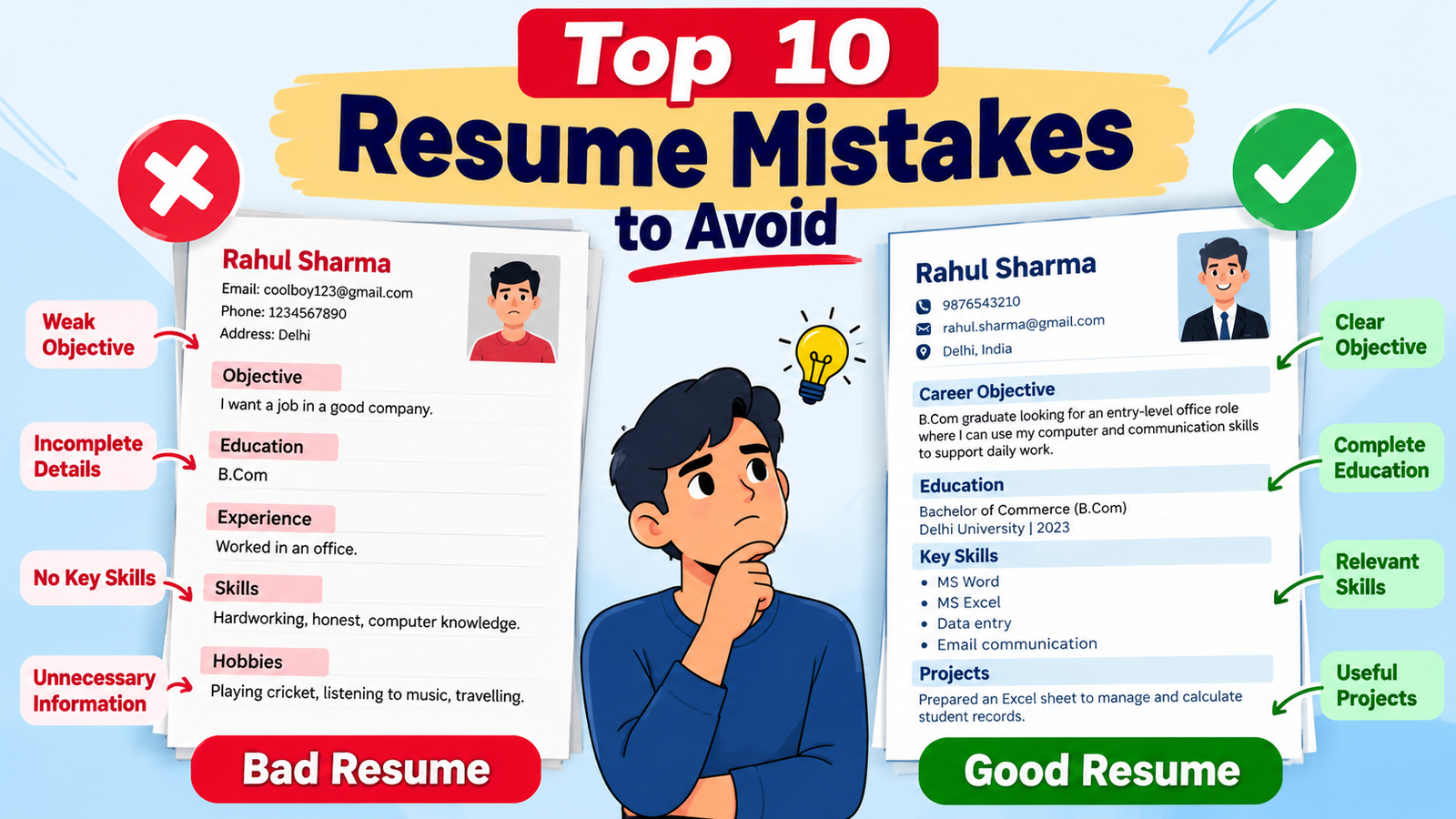
Bad Resume vs Good Resume Example
Here is a simple example for a fresher applying for an office assistant job.
Bad Resume
-
Career Objective: I want a job in a good company.
-
Education: B.Com.
-
Skills: Hardworking and honest.
-
Experience: Worked in an office.
What is wrong? The objective is too general, education details are incomplete, and the skills and experience are not explained clearly.
Good Resume
-
Career Objective: B.Com graduate looking for an entry-level office assistant role.
-
Education: Bachelor of Commerce, college name and completion year.
-
Skills: MS Word, basic Excel, email handling and document organisation.
-
Project: Prepared an Excel sheet to organise sample records.
Use the project example only if you have completed similar work. Add your real details rather than copying information that does not match your background.
Resume Checklist Before Applying
Check these points before sending your resume:
-
Your name, phone number and email address are correct.
-
Your resume matches the job requirements.
-
Your education and skills are accurate.
-
Spelling and grammar have been checked.
-
Your projects and experience are genuine.
-
The layout is easy to read.
-
You have used the file format requested by the employer.
Frequently Asked Questions
Why does a resume get rejected?
A resume may not move forward if it does not match the job requirements, contains incorrect details or makes relevant skills difficult to find. Competition, eligibility and hiring needs can also affect the result.
Can a fresher get a job without experience?
Yes. Some entry-level jobs accept freshers. Highlight your education, genuine skills, training, certificates and projects.
Is a one-page resume enough?
For many freshers, one page is a useful starting point. Experienced candidates may need more space for relevant work history.
How can I improve my resume?
Read the job description, correct mistakes, highlight relevant skills and use a simple layout. You can also read our guide on resume mistakes that may affect interview calls.
Conclusion
A good resume does not need fancy designs or difficult English. It needs clear information, genuine skills and details related to the job.
Avoid these 10 resume mistakes, check your details carefully and improve your resume before applying. If you are preparing for your first interview, read our guide on how to answer “Tell Me About Yourself”.
Remember: A good resume cannot guarantee an interview, but it can help an employer understand your strengths more easily.